The Survival of the Siam Cup
|
|
The Siam Cup is one of the oldest Rugby Trophies in
existence with an interesting and chequered history. It is the annual challenge trophy between
the Jersey Rugby Football Club and the Guernsey Rugby Union Football Club (not as some believe,
the island inter-insular challenge).
It was during the German Occupation of the islands that that the Cup itself
was at its greatest risk because the Germans wanted it to be returned to their homelands to be
melted down for funds for the Third Reich. The Cup then mysteriously disappeared, but was
safely hidden and resurfaced after the war in 1947. To this day, there is much speculation
about where it went during this time but the truth is, nobody really knows.
|
|
It was during the German Occupation of the islands that that the Cup
itself was at its greatest risk because the Germans wanted it to be returned to their
homelands to be melted down for funds for the Third Reich. The Cup then mysteriously
disappeared, but was safely hidden and resurfaced after the war in 1947. To this day, there
is much speculation about where it went during this time but the truth is, nobody really
knows.
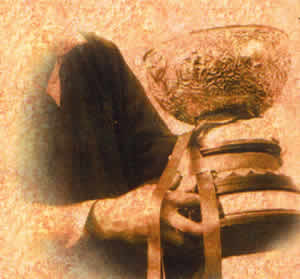
The actual Siam Cup is a large circular rose-bowl made from Siamese
(Thai) silver, beautifully decorated in traditional Siamese style, with figures of dancing
girls and elephant heads. It stands on an ebony base and is engraved with the cup winners
names, dating back as far as 1920.
The Cup was originally brought to Guernsey by a Lieut-Colonel C H Forty
who was serving in the Durham Light Infantry in Siam at the early part of the twentieth
century. Forty along with four other colleagues, donated the trophy to encourage interest
in the game of Rugby, on hearing that Rugger was no longer played between Victoria College
in Jersey and Elizabeth College in Guernsey. The story goes that Vajiravudh, son of the
King of Siam, also served in the Durham Light Infantry and was befriended by Forty and Capt
S P Groves, another donor of the Cup. Vajiravudh later became King Rama VI and it seems
certain that it was he that instructed that the Cup be made from Ticals (Siamese silver
dollars) by the Court silversmith.
|
|
It is this chequered history and its age that makes the survival of the Siam
Cup so important to the people of Guernsey and Jersey. So much so that at the request of the
English Rugby Union, it is now safely kept at the Rugby Union Museum in Twickenham. The clubs
agreed to this, provided that a replica was made which could be displayed each year by the
winning side. Using moulding techniques developed following the fire at Windsor Castle, a
Guernsey jeweller, Bruce Russell, created the replica which is barely distinguishable from the
original. The original was presented to a vice president of the Rugby Union at a formal handing
over ceremony during the Siam Cup weekend in 1997.
Useful Link
Rugby Union Football
|
 |
Reproduced with the kind permission of Lynx Financial Systems, main sponsors of the 2001 Siam Cup
Weekend
| 
