| Island Life | ||
|
the community website serving the Channel Islands celebrating 18 years 2000 - 2018 |
||
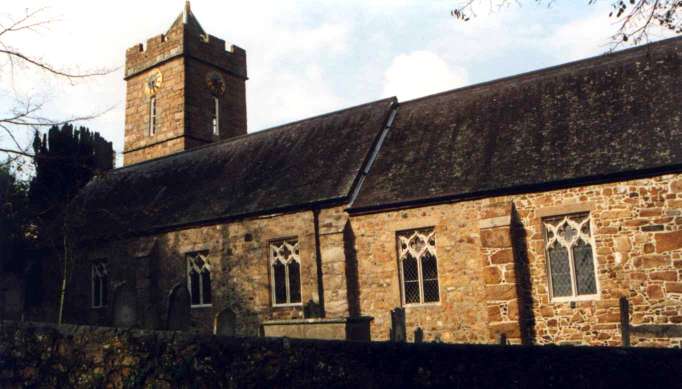
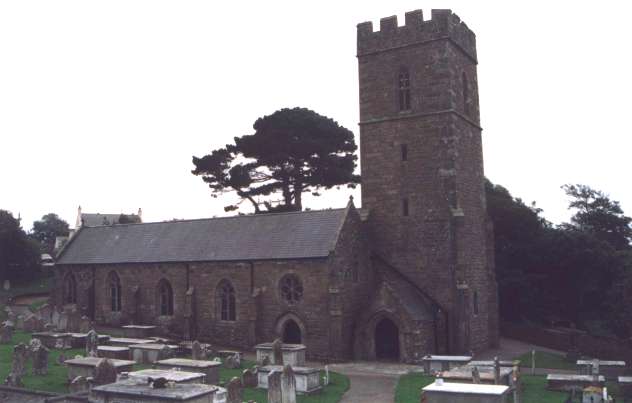
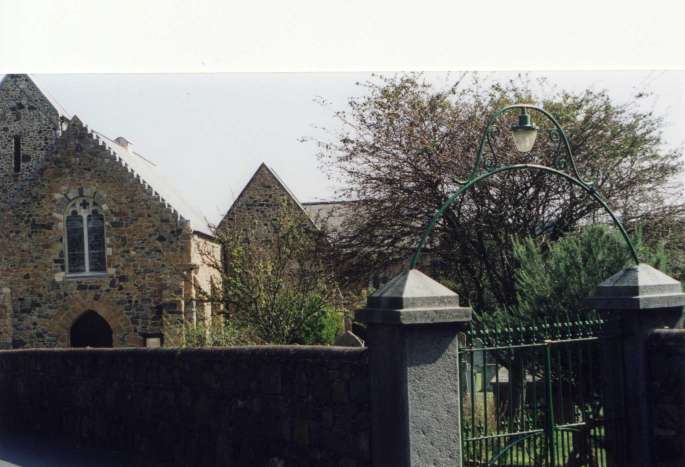
Guernsey ChurchesParish ChurchesA visit to Guernsey must include visits to the various parish Church buildings. Arguably the most impressive, the Town Church is mentioned in documents as far back as 1048. St Sampson's is thought to have the oldest Church situated where the St Sampson brought Christianity to the island around 550. The current Church building dates back to the 12th century. The other parish churches were also built in the 11th and 12th centuries except for the fairly recent Torteval Church, built in 1816. It is believed that most of the Church sites were originally sites of pagan worship. DA: Disabled Access; HL: Hearing Loop
Town ChurchOriginally known as Sancti Petri de Portu, many regard the Town Church as the Cathedral Church and the finest in the Channel Islands. The first mention of the Church in official documents was in 1048 when it is thought to have been given to the Abbot of Marmoutier by William of Normandy. It is likely that the original building was made of wood. The current building was built over a 200 year period with the chancel completed in the 12th century and the chapel added in 1462. The church was completed in 1475. However restoration work was carried out to the spire in 1721. The bells were recast in 1736 and in 1913. The clock was installed in 1781. Up until 1886, the rows of pews went in various directions and at that time some re-alignment was undertaken. A copy of the text of an order from Pope Sixtus IV granting neutrality to the island is displayed in the church. In 1414, the English Crown took over the church but interestingly the church paid tithes to the Bishop of Coutanches until 1548. Up until the middle 1700's, the Church was completely surrounded by street markets and houses. A stream ran past the Church and around the harbour near to Woolworths. A memorial to the famous islander Major General Sir Isaac Brock can be found inside the Church together with many other memorials. In 2001, work started on repairing the 500 year old oak vaulted rafters in the roof, which are now rare in England and believed to be the last surviving of this type in the Channel Islands. The joints are now quite weak and are being strengthened with stainless steel plates on the ridges, but the beams themselves remain in good condition. They work the subject of public outcry when the church decided to replace the rafters in 2000, but the Ecclesiastical Court decided after taking expert advice, that the roof could be saved. Perry's Ref: T L8
Castel ChurchSte Marie du Castro was built in the 12th century (the church was mentioned in papal documents of 1158) but is situated on a site of pagan worship and history also suggests that a Viking fortified castle Chateau du Grand Sarrasin also once stood there. It is thought that locals confused the Vikings with Saracen another name for a Mohammedan fighting in the crusades. Early Christians took over the pagan site and In Neolithic female statue menhir was found under the Church floor in 1878 but it is not known for how long can it remained hidden. It now stands outside the main door and has the outline of a necklace and head-dress. Flat stones at the foot of the statue are the Fief seat of the Cour du Fief du Lihou where the feudal court was held until the late 1800s. A low window on the south side of the nave was used by lepers attending Mass in the churchyard. Inside in the North aisle, can be found 13th century frescoes. The church rather surprisingly is almost on the parish border but folklore has it that the fairies kept scattering the stones on the intended site at the centre of the parish near Les Eturs road. Possibly as a result of this, further chapels were built in the outlying districts. These were St Anne's at King's Mills, St George's on Route Deslisles and St Matthew's near Cobo, the latter being built in Victorian times. The Chapel of St George was demolished in the 18th century but near to the estate bearing his name, can be found the feudal courthouse of the Fief Le Compte and the holy well of St George which is said to have healing properties. In 1999, when the church floor was lifted to enable repairs to be carried out, workmen discovered and called in Archaeological Officer Heather Sebire. She identified it as a bell casting pit dating back to the 1680s when French bell founder Paul Bourdin visited a number of local churches. A Fleur-de-lis which was his trade mark was found on pieces of the mould. In 1872, former bailiff Edgar McCullough excavated the west end of the church believing that it was a site of a Roman building, but narrowly missed discovering the bell pit. Perry's Ref: 15H4
Forest ChurchSte Marguerite de la Foret is the Island's smallest parish Church and was built in two stages with the nave, chancel and the centrally positioned tower in the 13th century and additions in the 15th century. Interestingly it has two entrances, one originally for men and the other for women. All now enter by the north door. Its walls feature massive stones which were once part of a dolmen. The Church originally served the small community at Le Bourg. The inside of the Church was restored in 1891. The Church clock commemorates Queen Victoria's Diamond Jubilee. The churchyard has indications that it was an ancient burial ground. Perry's Ref: 28D3
St Andrew's ChurchOriginally known at St Andre de la Pommeraye (St Andrew of the apple orchard), this is one of the island's smallest churches and dates back to the 12th century. However it more than doubled in size in the 15th century. I sits near a spring La Fontaine de St Clair, originally thought to have curative powers. Although St Andrew's does not have any coastline, large boulders from the sea have been used in its construction. The Apple orchard has long since disappeared. Perry's Ref: 23G3
St Martin's ChurchSt Martin de la Bellouse dates from around 1225 with the centrally situated tower (similar to the one at the Forest), nave and chancel completed by 1250. The South porch was added around 1520 and until 1869, was the meeting place of the Douzaine. The church sits on an ancient holy site in attractive surroundings. It is well known for the female menhir stone figure ( a Breton word meaning "long stone"(dating back to 2500 - 1800 BC) La Gran' Mere du Cimquiere which guards the entrance to the cemetery. In prehistoric times, the statue would have been idolised and in the 17oo's it became the focus of witchcraft. Even in the 19th century this activity is thought to have continued and a church warden his reported to have split the stone, but locals later repaired it. Today some folk still place coins on her head or flowers around her neck for good luck. The Church has the only font in the island which dates from before the Reformation. Perry's Ref: 24D5
St Pierre du Bois ChurchBuilt around 1375 and added to in the 15th century, this Church sits in beautiful surroundings on a hillside. Its floor makes this all the more apparent as it slopes one and a half metres from east to west. When refurbished in the Victorian era, men and women sat separately and even entered through different doors. The church boasts an impressive tower containing 13 bells, the largest peal in the island. Perry's Ref: 27F1
St Saviour's ChurchThis is the largest of the country churches and stands at the top of a valley overlooking the reservoir. Part of this impressive Church was built in the 12th century but most of it dates to the 14th and 15th centuries. The tower was re-built in the 17th century possibly following damage from lightning. In the 18th century the vestry was added and held the parish artillery. During the occupation, the Germans used the Church's impressive 35 metre high spire as a lookout post and also constructed an extensive network of tunnels under the Church it. Russian and Polish slave labour was used to carve the tunnels out of the granite rock. The tunnels were used as munitions stores as the Germans thought it unlikely that the allies would bomb a Church. The churchyard has a number of interesting items, including one statue which is a Christianised menhir with a cross incized on its face. There is also a stone bench which was used as a meeting place for the Lord of the manor, Fief Jean Gaillard and the oldest gravestone belongs to a Nicholas Torode who died in 1602. Perry's Ref: 22A3
St Sampson's ChurchThe Church it is thought to be the oldest in the island and the site is reputedly the place where St Samson landed and brought Christianity to the island in 550AD having studied in Wales. Prior to the infilling of Braye du Valle, the church stood on its shores The nave and chancel date back to the 12th century and was completed in 1350. The rudimentary tower consists of a double-pitched roof. Perry's Ref: 11F3
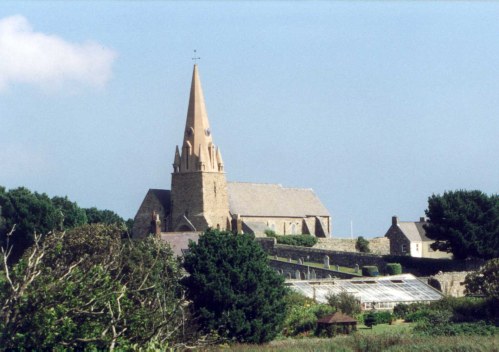
Torteval ChurchThe original Church of St Philippe fell into a state of disrepair and was demolished when the current Church replaced it in 1816. The States of Guernsey funded the construction as the parishoners had been unable to maintain its upkeep. It features an unusual round tower with the tallest spire in the island. It contains the oldest bell in the Channel Islands, cast in France in 1432. Thankfully it survived both the Reformation and the demolition. Perry's Ref: 26D3
Vale ChurchThe Vale Church is one of Guernsey's most ancient and a priory was built by Benedictine monks from Mont St Michel on the site around 968 and consecrated in 1117 Regrettably most of it no longer exists as the Rectory now stands on part of the site. However it is thought that the chancel and parts of the choir date to 1155 when a papal document listed the church as part of its assets. In 1585 a French Protestant priest was appointed and remained Calvinist until 1662 when an Anglican was appointed. The Church sits in a commanding position overlooking L'Ancresse common and the remains of Braye du Valle. A mooring ring on the Church, was used by people visiting the Church by boat. Perry's Ref: 6B5
| ||||||||||||||||||||||||||||||||||||||||||||||||





Search the Site
|
Follow us on Twitter |
Find us on Facebook |
|
|
 |

Home Site Map Contact Terms of Use
Copyright © 2011 Island Life.